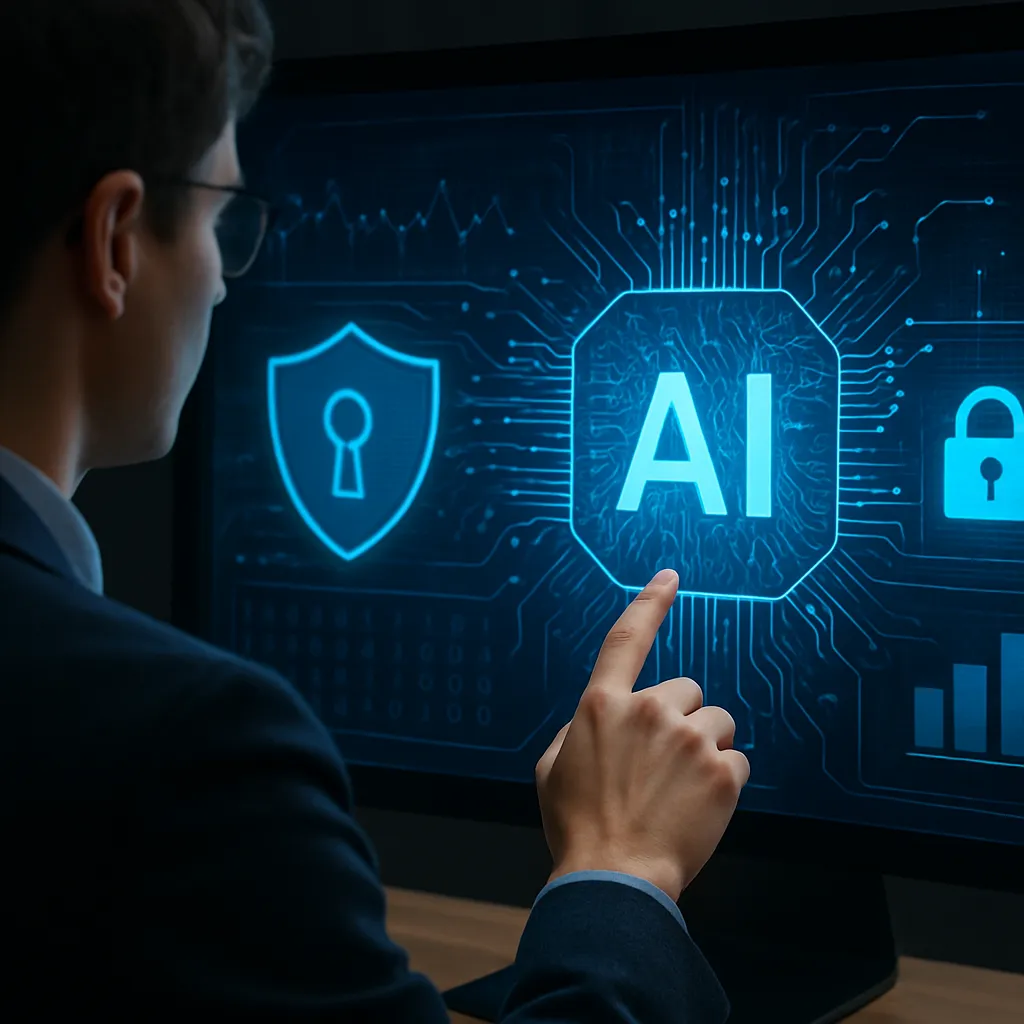
As cyberthreats evolve at an unprecedented pace, businesses need more than traditional firewalls and signature-based detection to safeguard their digital assets. Harnessing the power of artificial intelligence offers a transformative approach to **predict** and prevent sophisticated cyberattacks before they can inflict damage. By integrating machine learning models, real-time analytics, and automated response mechanisms, organizations can build a proactive security posture that adapts to emerging threats.
Understanding AI-driven Threat Detection
Modern security operations centers (SOCs) are overwhelmed by the volume of alerts generated daily. Incorporating machine learning algorithms helps filter noise and surface high-fidelity alerts through anomaly detection techniques. Unsupervised models analyze network traffic baselines and identify deviations that signify potential breaches. Supervised systems, trained on labeled data, classify known attack patterns—such as phishing, malware distribution, or lateral movement—with remarkable accuracy.
Key components of an AI-driven threat detection platform include:
- Threat intelligence feeds: Enrich data with indicators of compromise (IOCs) from open-source and commercial sources.
- Behavioral analytics: Profile user and system behaviors to detect insider threats or account takeovers.
- Feature engineering: Convert raw logs into meaningful metrics—such as login frequency, file access patterns, and process spawn rates.
- Model training and validation: Continuously retrain models to account for shifting adversary Tactics, Techniques, and Procedures (TTPs).
By combining these elements, organizations can achieve near-instantaneous recognition of suspicious activity, enabling security teams to investigate only the most critical events.
Building a Predictive Analytics Framework
Effective deployment of AI in cybersecurity begins with a robust predictive analytics framework that spans data collection, model development, and operationalization. This framework must address the following stages:
Data Ingestion and Labeling
- Aggregate logs from endpoints, network devices, cloud environments, and identity systems.
- Implement automated labeling pipelines by correlating events with known incidents or sandbox detonation results.
- Ensure data quality and consistency through normalization and deduplication processes.
Model Development and Evaluation
- Experiment with diverse algorithms, including decision trees, neural networks, and ensemble methods.
- Apply cross-validation and A/B testing to measure performance metrics—precision, recall, and false positive rate.
- Leverage transfer learning to adapt pre-trained security models for specific organizational contexts.
Deployment and Continuous Learning
- Containerize models for scalable inferencing using microservices architectures.
- Monitor model drift by tracking prediction accuracy over time and retrain when performance degrades.
- Integrate feedback loops where analysts label new incidents to enrich training datasets.
Implementing this predictive analytics lifecycle ensures that AI systems remain agile, aligned with evolving threat landscapes, and capable of delivering actionable insights at the speed of business.
Integrating AI into Incident Response
Automating portions of the incident response process allows security teams to focus on strategic tasks rather than repetitive triage. AI can orchestrate containment and remediation by interfacing with security orchestration, automation, and response (SOAR) platforms to execute playbooks automatically.
- Real-time Alert Prioritization: Use risk scoring models to rank incidents based on potential impact and confidence levels.
- Automated Triage: Deploy bots that gather contextual information—such as threat actor profiles, affected assets, and exploit methods—to accelerate decision-making.
- Remediation Suggestions: Present analysts with tailored recommendations, such as IP blocking rules, user isolation, or patch deployment scripts.
- Self-healing Mechanisms: Trigger automated rollback of unauthorized changes or quarantine infected endpoints without manual intervention.
These capabilities enhance organizational resilience by closing the gap between detection and response, often within seconds of threat identification.
Overcoming Challenges and Ethical Considerations
While AI-driven defenses provide significant advantages, several challenges demand attention to maintain trust, compliance, and effectiveness:
- Data Privacy: Collecting sensitive logs may conflict with regulations such as GDPR or CCPA. Implement data anonymization and access controls to mitigate risks.
- Bias and Fairness: Training data may inadvertently reflect historical biases, leading to elevated false positives for certain user groups. Regularly audit models for discriminatory patterns.
- Explainability: Complex models like deep neural networks can be opaque. Incorporate techniques such as SHAP values or LIME to generate human-readable explanations for alerts.
- Scalability: Large-scale environments generate terabytes of data daily. Employ distributed computing frameworks and tiered storage solutions to handle high throughput.
- Integration Complexity: Legacy systems often lack APIs. Develop middleware or adapters to ensure seamless AI integration with existing security tools.
Addressing these considerations ensures that AI initiatives not only deliver superior threat defense but also uphold organizational values and legal obligations.
Future Trends in AI-Powered Cyber Defense
Emerging technologies promise to further enhance predictive and preventive capabilities:
- Federated learning: Train models across distributed datasets without exposing raw data, preserving privacy while improving collective defense.
- Adversarial AI defenses: Develop algorithms robust against evasion techniques such as data poisoning and adversarial examples.
- Quantum-safe encryption: Anticipate the risks posed by quantum computing to current cryptographic standards.
- Autonomous security agents: Deploy intelligent agents that patrol cloud environments, detect threats, and adapt policies in real time.
Organizations that invest in these forward-looking innovations will be well-positioned to anticipate threat actor evolution and maintain a secure digital ecosystem.